
What to expect at your apartment move-in walkthrough
By Sofia Delgado · Updated 2026-07-06
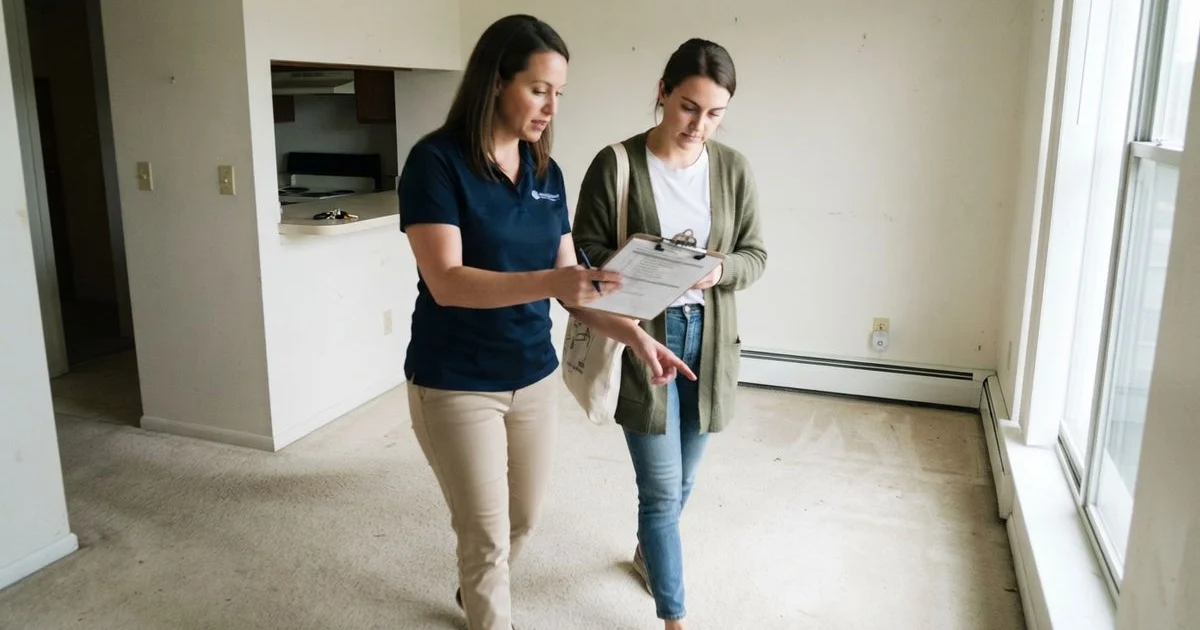
The move-in walkthrough is easy to rush through when you are focused on unpacking boxes, but it is one of the most important steps for protecting your security deposit down the road. A thorough walkthrough on day one is what makes it possible to prove, months or years later, that a scuff or stain was already there when you arrived.
What the walkthrough actually covers
Most communities provide a written move-in condition report, sometimes called an inspection checklist, that goes room by room and documents the existing condition of walls, flooring, appliances, fixtures, and any visible damage. You and a representative of the property, or sometimes just you independently, go through the unit and note anything that is not in perfect condition.
How to do it thoroughly
| Area to check | What to document |
|---|---|
| Walls and ceilings | Scuffs, nail holes, paint condition, any water stains |
| Flooring | Scratches, stains, worn spots, carpet condition |
| Appliances | Functionality, existing scratches or dents, cleanliness |
| Fixtures and hardware | Working locks, functioning outlets, light fixtures |
| Windows and doors | Proper seal, functioning locks, screens present |
Do not rely on memory or a quick glance. Open every cabinet, test every faucet, and check behind furniture placement areas before they are blocked by your own boxes.

Why this protects your deposit later
Under Texas law, a landlord can deduct for actual damage but not for normal wear and tear, and disputes over which is which are common. A documented move-in condition report, backed by timestamped photos, is the clearest evidence you have that a given mark or wear pattern existed before you moved in, not because of anything you did. Without it, a move-out dispute often comes down to your word against the property’s, which rarely favors the resident.
Practical steps to take on move-in day
Take photos or video of every room before you bring in a single box, since furniture and belongings quickly obscure the walls and flooring underneath. Note anything, even minor, on the written report rather than assuming small issues are not worth mentioning. Submit the completed report within whatever window the property allows, and keep a personal copy for your own records, not just what you hand back to the leasing office.
What to do with the completed report
Once the checklist is complete, submit it exactly the way the property requires, usually through the resident portal or by email, and request a confirmation that it was received. Keep your own copy along with your photos somewhere reliable, a dedicated folder in cloud storage works well, since you may not need to reference it again for a full year or longer. It is easy to lose track of a printed copy tucked into a moving box, and that is exactly the document you want on hand at move-out time.
If something is missing or already broken
Report anything that needs repair, a broken fixture, a malfunctioning appliance, immediately through the resident portal, separate from the condition documentation itself. Getting a repair request in writing on day one also establishes a clear timeline if the issue takes a while to resolve.
A pattern worth checking before you sign
How thoroughly a property handles move-in documentation is a reasonable signal for how it will handle disputes at move-out too. Reviews that mention withheld deposits or disputed charges are worth reading closely before you commit. We weigh this kind of resident feedback into every score we publish. See how on our methodology page.
What a rushed walkthrough actually costs you
It is tempting to skim through the checklist quickly, especially when a moving truck is waiting and you have a full day of unpacking ahead. But a rushed walkthrough tends to miss exactly the kind of small existing damage that later shows up as a deduction: a hairline crack in a countertop, a worn patch of carpet near a doorway, a stain behind where your couch will eventually sit. Setting aside even thirty focused minutes before you start unloading is a small time cost against a much larger financial one if a dispute comes up eight or twelve months later.
Where to start
Browse our full directory of scored Greater Fort Worth communities to see how residents describe the move-in and move-out experience at properties you are considering, before you are the one filling out the checklist.
FAQ
- Is a move-in walkthrough required by law in Texas?
- Texas law does not universally require a formal joint walkthrough, but a written move-in condition report is standard practice at most communities and is one of your strongest protections at move-out. Complete one even if the property does not push for it.
- How long do I have to report issues found during the walkthrough?
- This varies by property, but many give a window of a few days after move-in to submit additional notes. Confirm the exact deadline and get it in writing.
- Should I take photos even if the property provides a written report?
- Yes. A written checklist and timestamped photos together are much stronger evidence than either alone if a deposit dispute comes up later.
- What if I move in and the walkthrough already happened without me?
- Ask for the report and add your own documented notes as soon as possible, even after the fact. Some properties allow you to submit additional condition notes within the first few days.